Third Party Drug Manufacturing Companies have a significant part to play in the pharmaceutical industry by allowing businesses to benefit from outsourcing and branding and marketing. The pricing structures are flexible and are designed to meet business requirements of any type whether startups or existing pharma brands. An insight into the pricing structures of Third Party Manufacturing Pharma Companies will help make the right choices for achieving maximum profits.
Pharmaceutical Contract Manufacturing is becoming a popular way of reducing costs and enhancing efficiency in the highly competitive scenario today. The pricing structure varies depending upon production volume, type of products manufactured, packaging and regulatory compliance. Regardless of whether you are planning to use Third Party Manufacturing Services or expanding your current business, knowledge about pricing structure will go a long way in helping negotiate better and maintain quality standards. This post covers various types of pricing structures for Third Party Manufacturing as well as Third Party Manufacturing Pharmaceuticals.
Understanding Pricing Models in Third Party Manufacturing Pharma Companies
Before selecting a partner, it is important to understand how Third Party Drug Manufacturing Companies structure their pricing. The pricing model determines how much you will pay and what services are included in the package.
1. Cost-Plus Pricing Model
This is one of the most common models used in Pharmaceutical Third Party Manufacturing. In this model, the manufacturer calculates the total production cost and adds a fixed profit margin.
Key Components:
- Raw material cost
- Labor charges
- Packaging cost
- Overhead expenses
This model is transparent and easy to understand, making it ideal for businesses entering 3rd Party Manufacturing Pharmaceuticals for the first time.
2. Fixed Pricing Model
In this model, Third Party Manufacturing Pharma Companies offer a fixed price for manufacturing a specific product. This price remains constant regardless of minor fluctuations in raw material costs.
Benefits:
Predictable budgeting
Easier financial planning
No hidden costs
However, fixed pricing may be slightly higher as manufacturers include risk factors.
Main Pricing Models Explained in Pharmaceutical Contract Manufacturing
In order for one to completely comprehend what Pharmaceutical Contract Manufacturing is, they need to analyze the various factors affecting it such as pricing, which depends on the production scale and other related factors.
3. Volume-Based Pricing Model
This model is widely used by Third Party Drug Manufacturing Companies. The cost per unit decreases as the order quantity increases.
Advantages:
Lower cost for bulk orders
Better profit margins
Ideal for established pharma businesses
For example, ordering 10,000 units will cost less per unit compared to 1,000 units.
4. Per Unit Pricing Model
In this structure, Third Party Manufacturing companies charge a fixed rate per unit produced. This model is simple and commonly used in 3rd Party Manufacturing Pharmaceuticals.
Best For:
- Small businesses
- Startups
- Trial product launches
It allows businesses to control costs without committing to large production volumes.
Additional Cost Factors in Third Party Manufacturing Pharmaceuticals
Apart from basic pricing models, several factors influence the overall cost in Pharmaceutical Third Party Manufacturing.
1. Product Complexity
Formulations that are complex demand more advanced technology and labor, hence raising costs. The various types of medications have differing prices.
2. Packaging Requirements
Premium or customized packaging increases the cost. Many Third Party Manufacturing Pharma Companies offer flexible packaging options to suit different budgets.
3. Regulatory Compliance
Pricing will be higher with regulatory compliance; however, this will ensure that high-quality medications are produced in Pharmaceutical Contract Manufacturing.
4. Research and Development
If the manufacturer is involved in product development, additional R&D charges may apply. This is common in innovative Third Party Drug Manufacturing Companies.
Choosing the Right Pricing Model in 3rd Party Manufacturing Pharmaceuticals
The selection of appropriate pricing models should be based on your objectives and budgets.
For Startups
Startups entering Third Party Manufacturing should consider:
- Per unit pricing
- Cost-plus pricing
These models offer flexibility and lower initial investment.
For Established Businesses
Companies with strong market presence can benefit from:
- Volume-based pricing
- Fixed pricing contracts
These options reduce long-term costs and improve scalability.
For Custom Products
If you are working on specialized formulations, Pharmaceutical Contract Manufacturing with cost-plus pricing is more suitable due to its transparency.
FAQs on Pricing Models of Third Party Drug Manufacturing Companies
Q1. What Pricing Model Is Commonly Used By Third Party Drug Manufacturing Companies?
Ans: Cost-plus pricing model is the most common one. The cost-plus pricing comprises costs of production together with a fixed margin. Cost-plus pricing makes the process very flexible for businesses operating in Third Party Manufacturing of Pharmaceutical.
Q2. How Can I Minimize Costs in Pharmaceutical Contract Manufacturing?
Ans: It is possible to minimize your costs through ordering in bulk quantities, using standard packages, and dealing with Third Party Manufacturing Companies that have expertise in their work at affordable costs.
Q3. Does Volume Pricing Work Well in 3rd Party Manufacturing Pharmaceuticals?
Ans: Volume pricing works well because it ensures that the unit cost will be minimized. This type of pricing is most effective for companies that experience high demands.
Conclusion
When making decisions regarding the management of your company in the pharmaceutical industry, it is imperative to take into account the data related to pricing policies followed by ISO and GMP Cert. Third Party Drug Manufacturing Companies. In whichever form of pricing policy you adopt, be it cost-based, fixed, per unit price, or volume pricing, all have advantages and disadvantages that can differ according to the size and objectives of your company.
Third Party Manufacturing Pharma Companies possess different types of flexible pricing systems that can prove beneficial for both start-up enterprises and well-established companies. It will allow you to evaluate all expenses incurred during the production and packaging stages.
As the Pharmaceutical Contract Manufacturing and Third Party Manufacturing market evolves, it becomes necessary to choose the most suitable pricing strategy that will guarantee the success of your venture. Choose wisely and rely on credible third party manufacturing companies.
Must Read: What are the Common Challenges in Injection Manufacturing?
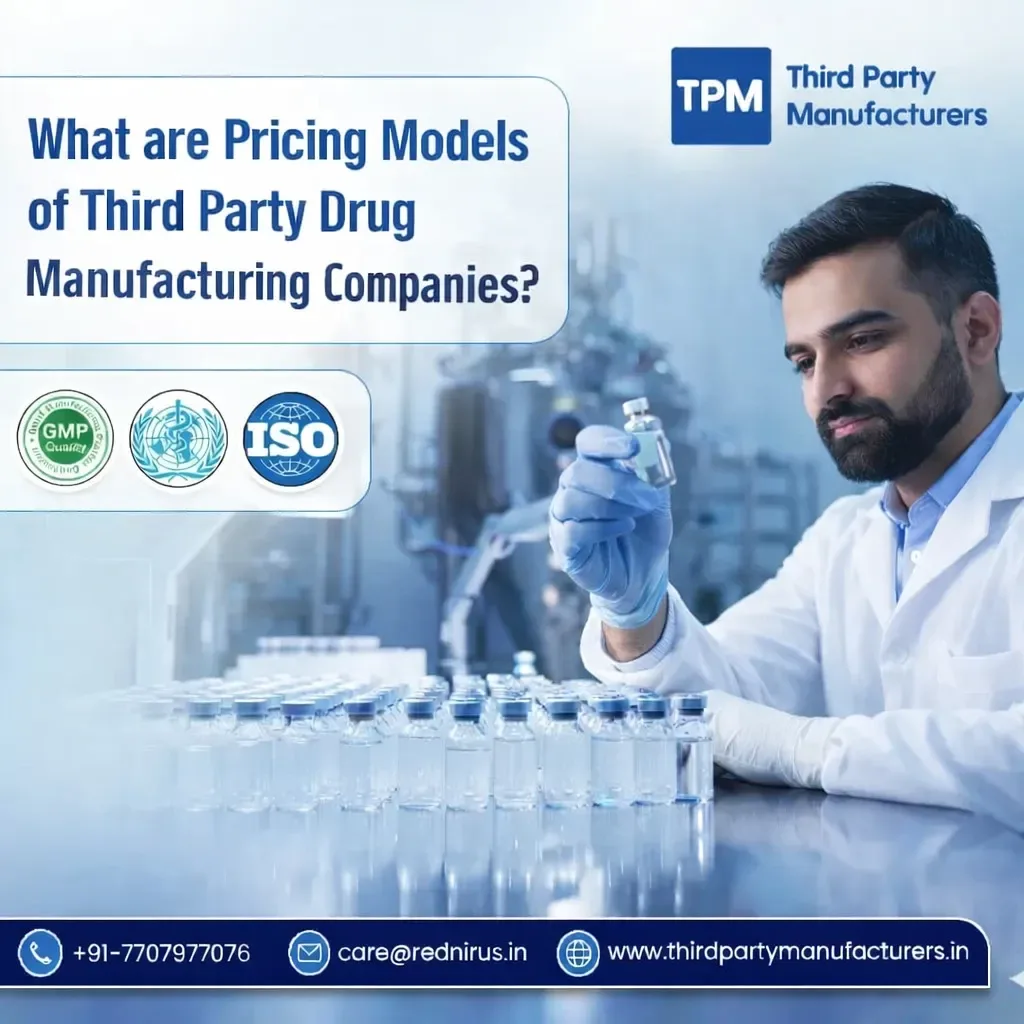
What are Pricing Models of Third Party Drug Manufacturing Companies?
Third Party Drug Manufacturing Companies have a significant part to play in the pharmaceutical industry by allowing businesses to benefit from outsourcing and branding and marketing. The pricing structures are flexible and are designed to meet business requirements of any type whether startups or existing pharma brands.
Third Party Drug Manufacturing Companies have a significant part to play in the pharmaceutical industry by allowing businesses to benefit from outsourcing and branding and marketing. The pricing structures are flexible and are designed to meet business requirements of any type whether startups or existing pharma brands. An insight into the pricing structures of Third Party Manufacturing Pharma Companies will help make the right choices for achieving maximum profits. Pharmaceutical Contract Manufacturing is becoming a popular way of reducing costs and enhancing efficiency in the highly competitive scenario today. The pricing structure varies depending upon production volume, type of products...
Key takeaways
- Understanding Pricing Models in Third Party Manufacturing Pharma Companies
- Additional Cost Factors in Third Party Manufacturing Pharmaceuticals
- Choosing the Right Pricing Model in 3rd Party Manufacturing Pharmaceuticals
- FAQs on Pricing Models of Third Party Drug Manufacturing Companies
How to order What are Pricing Models of Third Party Drug Manufacturing Companies?
- Define the product Fix the composition, dosage form, pack size, quantity and your brand name.
- Shortlist manufacturers Compare WHO-GMP certification, product permission, capacity and location.
- Compare quotations Ask for the per-unit rate, MOQ, lead time and packing material cost in writing.
- Approve artwork and sample Finalise label, carton and MRP, and approve the pre-production sample.
- Receive your batch Pay the agreed advance and receive goods with invoice and certificate of analysis.